(Miss Primm Blog)
I’m afraid some people may not like me much after this article. But Miss Primm will never stay silent about key issues.
Miss Primm is an even-tempered woman on most subjects, but there are a couple of exceptions, one of which is AI-generated art on book covers.
Oh, no. I’m not anti-AI. Quite the contrary. But I believe in the old schoolroom rule of “eyes on your paper” for other people’s work.
Until they start complaining.
You see it on Reddit all the time.
“Oh, no! My book editor used AI!”
(Your editor used Grammarly. Grammar-checking software has been around for decades, and even traditional publishing houses use editing tools. Of course, Grammarly now has generative AI features, too. There’s a difference.)
“Oh, no! My developmental editor used AI!”
(And you expected your developmental editor to wade through 150,000 words of your romantasy tome, a third of which probably needs to be cut, for how much money?)\
And now, from Instagram:
“Oh, no! My book cover artist used AI! I specifically told him not to!”
Well, now. That’s a different matter. If you contracted for human-generated artwork, you should receive that.
But let’s examine what you’re actually asking for.
The $3,200 Illustration You Wanted for How Much?
The author commissioned a sophisticated comic fantasy cover featuring multiple characters, elaborate costumes, architecture, ships, landscapes, and enough visual chaos to keep a reader entertained for a good ten minutes.
It’s a delightful concept.
It’s also the kind of illustration that could take 40 to 80 hours of professional hand-drawn work, possibly more, including preliminary sketches, composition studies, client approvals, revisions, and final rendering.
At $40 an hour for eighty hours, we’re talking about $3,200 for the artwork alone.
Not the book cover. The artwork.
Because once you’ve commissioned your magnificent illustration, someone still has to turn it into a commercially usable book cover.
For an ebook, that means preparing the cover to meet the technical requirements of the different platforms where you’ll sell it.
Take a deep breath.
Different retailers have different recommendations for cover dimensions, aspect ratios, and file formats. Here are some of the specifications a cover designer must contend with.
Ebook Cover Dimensions by Publishing Platform
Dimensions are width × height, in pixels. These specifications concern ebook front covers, not paperback or hardcover wraps.
| Platform | Recommended dimensions or requirement | Format |
|---|---|---|
| Amazon KDP / Kindle | 1,600 × 2,560 | JPG, TIFF |
| IngramSpark | 1,600 × 2,560 is a practical export size; current guide specifies minimum 1,600 px shortest side and 1,873 px longest side | JPG |
| Apple Books | 1,600 × 2,560 is a suitable working size; minimum 1,400 px on shorter side | JPG, PNG |
| Barnes & Noble Press / NOOK | 2,500 × 3,500 suggested by a publishing reference; minimum 1,400 px shortest side | JPG |
| Kobo Writing Life | 1,600 × 2,400 practical choice; Kobo recommends 300 DPI and no more than 5 MB | JPG, PNG |
| Google Play Books | 1,600 × 2,560 practical choice; minimum 640 px, maximum 7,200 px per dimension | JPG, PNG, TIFF, PDF |
| Draft2Digital / Smashwords | 1,600 × 2,400 recommended | JPG preferred |
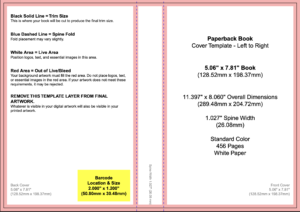
Want a paperback?
That’s another job. Now someone has to design the back cover and spine, calculate the correct dimensions based on trim size, paper type, and page count, accommodate the barcode, and produce a print-ready PDF that meets KDP specifications.
All of which takes time.
And time, dear authors, is something creative professionals expect to be paid for.
Miss Primm asked whether the author had paid the approximately $3,200 that eighty hours of hand-drawn illustration might command. The question went unanswered. Subsequently, the comment disappeared entirely.
Apparently, asking people to pay artists is a more controversial proposition than Miss Primm realized.
Of course, silence doesn’t tell us what the author paid. And Miss Primm doesn’t demand an answer. But it does leave the economic question unanswered.
And that question is worth asking.
Because the author revealed he got the cover from Fiverr, Miss Primm visited the site.
On the front page of its book cover listings, advertised prices ranged from $10 to $245, with many listings around $50.
She couldn’t help wondering how a professional illustrator could afford to spend eighty hours creating an elaborate fantasy scene for $50.
Let’s do the arithmetic, shall we?
Fifty dollars divided by eighty hours comes to 62.5 cents an hour.
Before platform fees.
Now, those advertised prices are starting prices, and a complicated custom illustration might cost considerably more.
But if you’re expecting eighty hours of hand-drawn artwork for fifty dollars, Miss Primm has a question.
Are you commissioning an artist, or auditioning someone for indentured servitude?
If You Want Human-Generated Art, Get Out Your Checkbook
Now, Miss Primm isn’t suggesting artists disregard a client’s instructions.
If you commission artwork with an explicit no-AI requirement, the artist should honor that agreement. If the budget doesn’t support the work, the artist should decline the commission or negotiate a different scope.
A promise is a promise.
But authors need to understand what they’re purchasing.
There is a considerable difference between commissioning an original, hand-illustrated fantasy scene and hiring a designer to create a book cover using AI-assisted imagery.
Both can produce attractive, commercially viable covers.
Both require skill when done well.
But they involve very different amounts and types of labor.
If you want a human illustrator to draw every character, every cloud, every feather, and every stone in your fantasy kingdom, commission one.
Extraordinarily talented illustrators would be delighted to take your money.
Just understand that you’re purchasing hours, sometimes weeks, of professional creative labor.
What Do Professional Book Covers Actually Cost?
Before anyone accuses Miss Primm of pulling these prices out of her rather substantial hat, let’s consult the professionals.
According to INeedABookCover’s 2026 pricing guide, professional book cover design can range from several hundred dollars to $3,000 or more.
The guide provides these approximate figures for different publishing markets:
| Publishing market | Estimated cover design cost |
|---|---|
| Small presses and nonprofit publishers | $600–$1,000+ |
| Medium-sized commercial publishers | $1,250–$2,000+ |
| Large commercial publishers | $2,000–$3,000+ |
Meanwhile, Reedsy reports an average cost for professional book cover design of approximately $880.
Of course, independent authors have other options.
Premade covers may cost $50 to $200. Budget freelancers may charge considerably less than established cover design studios, while dedicated indie design services often fall into the $220 to $800 range.
But here’s the important part.
INeedABookCover specifically distinguishes designed book covers from custom-illustrated jackets, which have their own budgets.
In other words, dear authors, commissioning someone to draw your magnificent fantasy image from scratch is not the same as paying a designer to assemble licensed stock images, apply typography, and prepare your files for publication.
Those are separate services, even when one professional provides them all.
Miss Primm has no objection to an author or publisher choosing an entirely human-illustrated cover. That’s their prerogative.
But that’s not the same as deciding the cover was tainted by “lazy” AI art.
AI can generate images. However, it doesn’t automatically turn those images into good book covers.
Nor does it automatically produce properly formatted files for KDP.
Someone still has to do that work.
And someone should be paid for it.
Miss Primm doesn’t object to people choosing human-created art. She objects to people treating professional creative labor as though it ought to be available at bargain-basement prices.
Nor does she believe using AI automatically makes someone a fraud, a cheat, or an incompetent artist.
The quality of the finished work matters. The honesty of the business arrangement matters. And the professional judgment brought to the project matters.
There’s a difference between having standards and having unrealistic expectations.
Allow Miss Primm to Introduce Bob
Bob is not his real name.
Bob commissioned me to create two covers for his two books.
The project used AI-assisted artwork, and Bob knew it from the start. In fact, he supplied AI-generated imagery himself.
The budget was $100 per cover, for a total project cost of $200.
Not $1,000.
Not $3,000.
One hundred American dollars per cover.
Now, before anyone concludes that Miss Primm ordinarily works for such princely sums, allow me to explain.
Bob had discussed plans for an ongoing book series, which meant I might continue cover design work. That sounded like a promising business relationship. So I agreed to the $200 price as a loss leader—a deliberately discounted project intended to establish a working relationship and, hopefully, secure future commissions.
It’s a perfectly legitimate business strategy. Occasionally, you accept less on the first job because you expect to earn more on subsequent ones.
That strategy depends on whether you’d actually want to work with the client again.
Unfortunately, Bob provided a valuable lesson in the difference between a loss leader and taking a loss.
For that first $100 cover, Bob received my time, design judgment, image compositing, typography, and revisions. I worked to create a cover that communicated his book’s SF genre and romantic premise, incorporating his feedback along the way.
Bob also had opinions.
Many opinions.
His writing coaches had opinions. His critique group had opinions. There were requests for different lighting, more pronounced visual effects, alterations to the characters, and changes to the lettering.
And I worked through those requests.
Eventually, Bob approved the work and paid the remaining $75 after the $25 deposit.
The second cover didn’t go so smoothly. I submitted concept art he said he loved, but… So I made multiple changes and resubmitted.
He went dark and ignored my queries. Then, after two weeks of silence, he rapidly fired another round of changes at 11:00 p.m. (while I was sleeping).
After a couple more comments in the middle of the night, with no response because of my somnolent state, he ended the job with several high-quality concept art frames in hand and paradoxically left a 5-star review.
Then he wanted his $25 deposit back.
The platform, scratching its head, refunded his deposit but paid me because I had done the requested work.
At one point, Bob informed me, “I gave you 5 stars. You should pay me for that.”
Miss Primm has encountered some remarkable business propositions in her time, but paying a client for the privilege of working for him was new.
Now, Bob was entitled to his opinions about the covers. He was entitled to request changes within the agreed scope of the commission. He was certainly entitled to decide the finished product wasn’t what he wanted.
But what Bob wasn’t entitled to was an unlimited supply of professional labor for a hundred dollars per cover.
And that, dear readers, is where we encounter the fundamental problem with so many arguments about AI in creative work.
People want the results of expensive creative labor without paying for it.
You cannot meaningfully defend artists against exploitation by tech companies while treating their time as practically worthless.
A One-Dollar Stock Image Does Not A Cover Make
 Here’s something that might surprise you about rendering covers with AI. It takes skill. I’ll use an example from my work.
The original stock photograph I bought for the central character cost me $1. I had a package of stock-image credits, so I got the image for practically nothing.
Getting that image to look the way I wanted?
Forty hours.
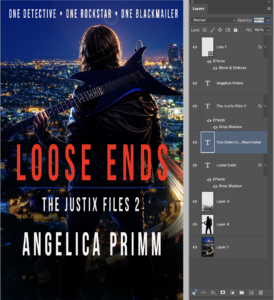
I wanted Rik Drake, my rock-star protagonist, standing with his back to the reader, looking out over Los Angeles with a specific guitar.
I knew exactly what I wanted. The image wasn’t exactly what I envisioned. It was the closest thing I could find. I had to take it apart and manipulate its elements to obtain the image I wanted.
To achieve that, I used AI to change elements of the image, including the head. Everything else is a stock image for the background and commercially licensed fonts for the typography.
As shown in the image above, the Photoshop file includes separate layers for the cityscape, Rik, atmospheric effects, title, tagline, series identification, and author name. Each element had to be positioned, scaled, and adjusted to work with the others.
AI helped me manipulate the source imagery. But it didn’t decide what the cover should communicate, how the composition should work, or where the typography belonged.
A competent cover designer needs to understand visual hierarchy, composition, typography, genre expectations, and the practical requirements of book production.
But because I used generative AI to create or alter elements of the artwork, I have to disclose that AI-generated content to Amazon.
Fine.
So when someone tells Miss Primm that AI-assisted artwork requires no effort, she has a rather pointed question.
Do you seriously want to tell me how the computer did all the work? Or that my design work doesn’t count because I used a tool to help me accomplish one part of the job?
Everyone Loved It. Until They Didn’t.
Recently, Miss Primm worked with a group that needed an anthology cover.
I created a layered composition using AI-generated images that I extensively manipulated to achieve the desired effect. I also incorporated purchased stock images and commercially licensed fonts.
It wasn’t as simple as typing a few words into an AI image generator and calling the result a book cover.
There were multiple elements to arrange, colors to balance, proportions to adjust, and typography to integrate.
The group reviewed the design and approved it.
Everyone loved it.
Until they didn’t.
After publication, members objected to the AI-generated imagery, even though they had approved the finished design. Specifically, one commenter said that for the next project, we should find a real artist.
“Very well,” said Miss Primm. For the next project, find a human artist to create the cover.
And that’s when the person responsible for finding that artist discovered an interesting fact.
Many of the cover designers they encountered were also using AI-generated elements in their work.
Why?
Because AI lets them create customized visual elements faster and cheaper than commissioning every component from scratch.
Imagine that.
The very technology the group objected to was being used by the professionals they approached as an alternative.
Now, there are certainly talented illustrators who work entirely without generative AI. If that’s what you want, you can find them. But you need to ask the right questions, set the commission terms, and understand what you’re buying.
You may discover the price differs greatly from what you expected.
The late, legendary Harlan Ellison was famous for saying, rather stridently, “Pay the writer!”
Miss Primm would like to add one more thing.
PAY THE ARTIST!
Sources and Further Reading
- INeedABookCover — Professional Cover Design and Pricing
- Reedsy — How Much Does Book Cover Design Cost?
Pricing figures are approximate U.S. market estimates. Fiverr prices reflect advertised listings observed by the author, not verified quotes for custom illustrations. Actual costs depend on complexity, licensing, revisions, and deliverables.